Khamenei's Directive Is the Deal-Killer — And Everyone Knows It
Iran's Supreme Leader has personally blocked uranium transfer abroad, killing the central US demand in Iran nuclear deal negotiations. The ceasefire is on life support — and the diplomatic theater surrounding it is a performance, not a negotiation.
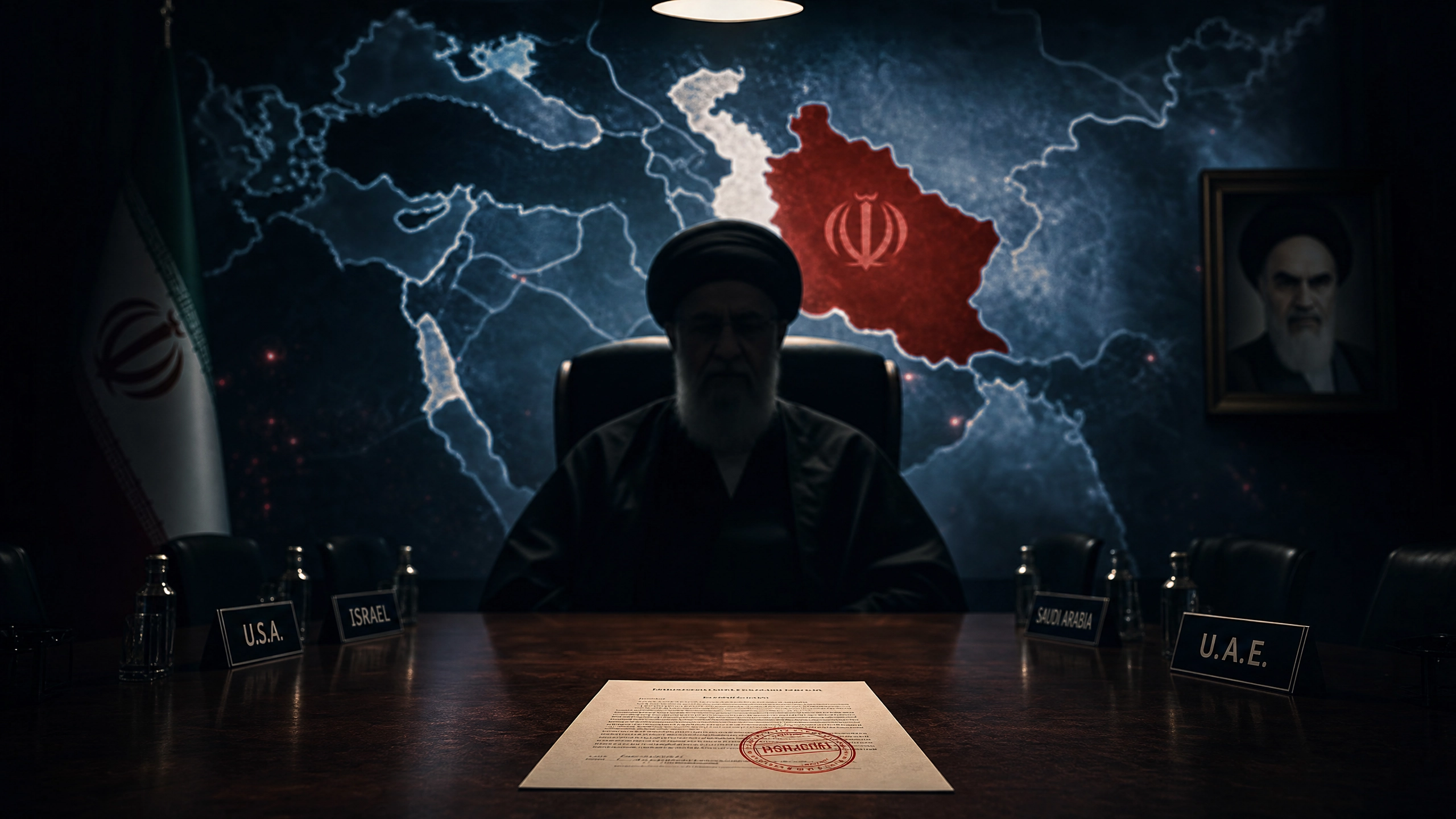
On May 22, 2026 — Day 84 of the Iran-US war — Reuters reported that Iran's Supreme Leader Ali Khamenei has issued a personal directive: Iran's near-weapons-grade highly enriched uranium (HEU) will not be sent abroad. Two senior Iranian officials confirmed the directive. Mojtaba Khamenei, the Supreme Leader's son and heir apparent, reportedly hardened this position earlier this week.
Secretary of State Marco Rubio said there were "some good signs" in the Iran nuclear deal negotiations. A Saudi media outlet published what it called a "final draft" of a US-Iran peace agreement and claimed an announcement was "within hours." Neither side has approved the draft. The ceasefire between Iran, Israel, and the United States — which began in early April — is now, in Trump's own words, on "life support."
Here is what the Khamenei directive actually means: the Iran nuclear deal is dead on arrival, and the diplomatic theater surrounding it is a performance for domestic and international audiences, not a genuine negotiation.
What the Khamenei Directive Actually Says
The United States has one non-negotiable demand at the Iran nuclear talks: Iran's stockpile of highly enriched uranium — estimated by the IAEA to be sufficient for approximately ten nuclear weapons — must leave Iranian territory. The US position, articulated repeatedly by Trump and Rubio, is that Iran cannot be permitted to retain a breakout-ready nuclear arsenal while signing a peace agreement. The entire logic of the deal, from Washington's perspective, rests on verified removal of the HEU stockpile.
Khamenei's directive says no. Not "we need more time to discuss this." Not "we need security guarantees first." No. The Supreme Leader of Iran has personally issued a directive — not a negotiating position, not a talking point for Pakistani mediators to relay — that the enriched uranium stays in Iran. Full stop.
When the Supreme Leader of the Islamic Republic issues a personal directive, that is not the opening bid. That is the final answer.
Iran's Nuclear Program Is Not a Bargaining Chip — It Is the Regime's Insurance Policy
To understand why Khamenei will never agree to transfer the HEU stockpile abroad, you have to understand what the nuclear program actually is to the Islamic Republic. It is not a deterrent in the Western strategic sense. It is the regime's existential insurance policy — the one asset that guarantees the United States and Israel cannot pursue regime change without catastrophic risk.
Muammar Gaddafi gave up his nuclear program in 2003 under US pressure. He was dead by 2011. Kim Jong-un refused to give up North Korea's nuclear program under decades of maximum pressure, sanctions, and military threats. He is still in power. The lesson is not subtle, and the Iranian leadership has drawn it explicitly and repeatedly.
The IRGC commanders who now run Iran — what the New York Times this week called a "band of brothers" forged in the Iran-Iraq War — are not ideologues making irrational decisions. They are strategic actors who have watched every US-backed regime change of the past thirty years. They know exactly what the HEU stockpile is worth. It is worth the regime's survival. No directive from the Supreme Leader is going to trade that for sanctions relief and a ceasefire that leaves the United States with carrier strike groups in the Arabian Sea.
The Hormuz Toll System Is the Second Deal-Killer
Even if the HEU dispute were somehow resolved — and it will not be — the second core sticking point is equally intractable. Iran has now formalized its control over the Strait of Hormuz through the Persian Gulf Strait Authority (PGSA), seized two more commercial vessels today, and is actively negotiating with Oman — a US ally — to co-administer a formal toll collection system for Hormuz transit.
The United States has explicitly warned Iran against demanding payment for passage through an international waterway. Iran is not only ignoring that warning — it is building institutional infrastructure to make the toll regime permanent and is recruiting American allies to legitimize it. The Oman partnership is a masterstroke of Iranian geopolitical maneuvering: it splits the Gulf alliance, gives the toll regime international legitimacy, and puts the US in the position of opposing its own ally's economic interests.
The US demand is that Hormuz return to free international navigation. Iran's position is that it now runs the strait and charges for the privilege of using it. These positions are not bridgeable through Pakistani mediation.
"Slight Progress" Is the Language of a Deal That Is Not Happening
Secretary Rubio's phrase "slight progress" deserves examination. In diplomatic language, "slight progress" after 84 days of war, with the Supreme Leader issuing a personal directive blocking the central US demand, is not progress. It is the language diplomats use when they need to avoid saying "we are failing" while keeping the ceasefire from collapsing entirely.
The Saudi media outlet Al Arabiya has now twice claimed a deal was "within hours." Both times, nothing happened. The ISW — the Institute for the Study of War — has consistently assessed that Iran's proposals "do not meet US demands." The gap between the two sides on Iran nuclear deal terms is not a matter of drafting language or sequencing. It is a fundamental disagreement about whether Iran gets to keep its nuclear program and its Hormuz leverage. The answer from Khamenei's directive is yes to both.
What the US Should Do
The United States entered this war with two stated objectives: eliminate Iran's nuclear weapons capability and reopen the Strait of Hormuz to free navigation. After 84 days of ceasefire, Iran's HEU stockpile is intact, Hormuz is under IRGC control with a formal toll regime, and Iran is rebuilding its drone arsenal faster than US intelligence expected.
The ceasefire has not advanced American interests. It has advanced Iranian interests. Every day of ceasefire is a day Iran rebuilds its military industrial base, restocks its drone and missile inventories, formalizes its Hormuz control, and watches American political will erode. The Khamenei directive is not a surprise. It is the logical conclusion of a regime that has correctly calculated that time is on its side.
Trump's warning of "very drastic action" if Iran refuses to give up its uranium is the right instinct. The question is whether Washington has the strategic clarity and political will to act on it before the ceasefire window closes entirely — or whether "no hurry" becomes the epitaph for American objectives in the Iran war.
The Supreme Leader has given his answer. The question now is whether the United States gives its own.