The Iran War: Two Failures, Two Objectives, and No More Excuses
The war with Iran didn't start on February 28, 2026. It started decades ago — in the corridors of European foreign ministries and American intelligence agencies — when the world's powers repeatedly chose to defer the hard decisions. Now we're living with the consequences, and they are severe.
Two distinct schools of thought failed us getting here, and both bear responsibility for where we stand today.
The Doves Misjudged the Threat
For years, the appeasement camp insisted that Iran could be managed through diplomacy, sanctions relief, and nuclear frameworks. The JCPOA was their crown jewel — a deal that was supposed to buy time and build trust. It did neither. Negotiations were still nominally underway in February 2026 when the U.S. and Israel launched strikes, a reminder that Iran had been stringing the world along while advancing its program and expanding its regional influence at every turn.
What the doves fundamentally misjudged was Iran's willingness to go asymmetric — to weaponize its relationships and its geography. Iran responded to the strikes with missile and drone attacks against Israel, U.S. bases, and U.S. allies throughout the Middle East, and then closed the Strait of Hormuz, disrupting global trade. This wasn't improvised. This was a doctrine Iran had been building toward for two decades — proxy armies from Hezbollah to the Houthis, positioned like chess pieces across the region, ready to be activated the moment the pressure became existential.
The Hawks Underestimated the Choke Point
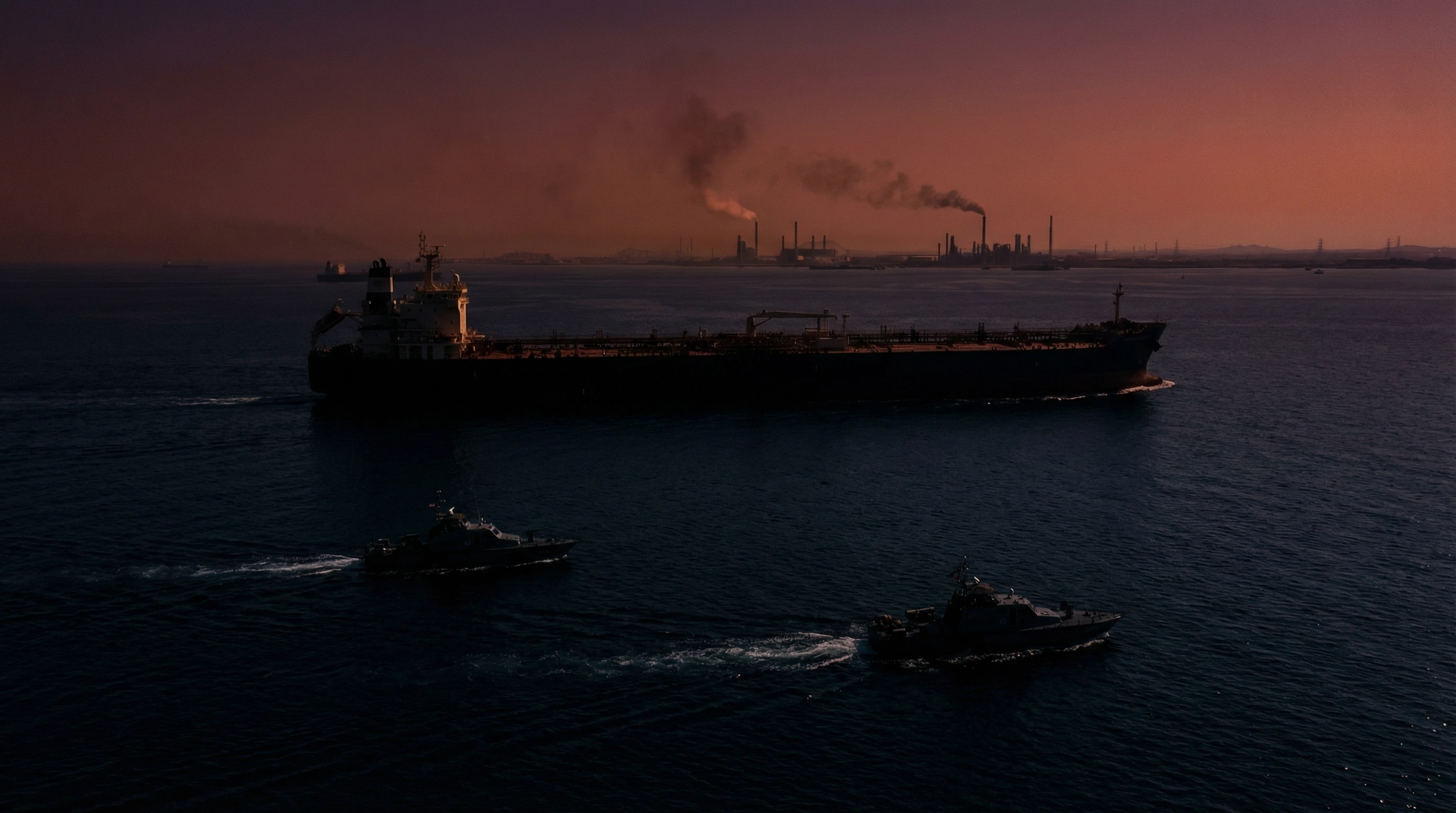
On the other side, the hawks who pushed for confrontation did so without fully reckoning with what Iran could actually do to the global economy in retaliation. The Strait of Hormuz is not just a waterway. It is a pressure point of almost incomprehensible economic leverage. Nearly 20% of the global supply of oil and gas normally moves through the Strait of Hormuz — along with key goods like fertilizer, aluminum, and helium.
Iran knew this and used it immediately. Commercial traffic through the Strait of Hormuz dropped more than 90% after the outbreak of conflict, triggering what the International Energy Agency called the "greatest energy security challenge in history." Iran then turned the strait into a revenue stream — charging some vessels up to $2 million in transit fees while selectively allowing passage to friendly nations. This is not the behavior of a rogue state improvising under pressure. This is a regime that understood its leverage far better than we understood theirs.
This Regime Is Not a Government. It's a Terror Apparatus.
Let's be honest about what we are dealing with. In January 2026, Iranian security forces massacred thousands of civilians in their crackdown on the largest Iranian protests since 1979. Iranian authorities executed at least 1,639 people in 2025 — the highest number since 1989. They fund and arm Hezbollah, Hamas, and the Houthis. They attack Gulf Arab states that are not at war with them. Iran launched missiles and drones on Bahrain, Israel, Jordan, Kuwait, Qatar, Saudi Arabia, and the UAE. These are not the actions of a sovereign government defending its borders. These are the tactics of a terrorist organization that happens to control a nation-state.
The nuclear dimension makes this existential. The regime has proven — through every action it has taken — that it cannot be trusted with the bomb. Full stop.
The Blame That Goes Further Back
The British, the French, the broader European establishment — they had decades of opportunities to draw a hard line. Instead they kept punting. They negotiated frameworks, offered concessions, and treated a theocratic regime with revolutionary ambitions like a normal state actor that could eventually be reasoned into compliance. They were wrong, and we are all now paying the price in $100-a-barrel oil, energy costs that have already hit the EU for more than €22 billion in higher fossil fuel bills, and a Middle East on fire.
Two Objectives. No Substitutes.
The administration started this war. That comes with a responsibility to finish it correctly. There are two non-negotiable outcomes.
First, Iran's nuclear weapons capability must be completely and verifiably eliminated. Not paused. Not inspected. Destroyed. The IAEA has already noted that Iran refused inspections of its damaged sites after the 2025 war. Trump's stated endgame includes Iran giving up its plans to develop a nuclear weapon and surrendering its enriched uranium stockpiles. That bar must not be lowered in any negotiation.
Second, the Strait of Hormuz must be placed under permanent international protection — a multinational coalition with the mandate, the naval power, and the legal authority to guarantee freedom of navigation for all nations. French President Macron has already announced preparations for a multinational mission aimed at restoring freedom of navigation in the strait, with a coalition conference planned in coming days alongside Britain. This is the right framework. The coalition needs to be broader, and its mandate needs to outlast this war.
Who should be in that coalition? That's a hard question. Many of the European nations now wringing their hands helped create this problem through decades of appeasement. Their credibility is limited. But the economic reality is universal — the UN Food and Agriculture Organization has warned that continued closure of the Strait of Hormuz could trigger a global food catastrophe. Nations whose populations face food and fuel shortages have a direct stake in solving this. That shared interest must form the foundation of any durable solution.
The time for half-measures is over. The world has watched Iran use its geography as a weapon, fund terror across the region, massacre its own citizens, and inch toward nuclear capability for thirty years. The reckoning is here. The only question is whether we have the will to see it through.