The Hormuz Gambit: Iran Is Winning the Economic War Even If It Loses the Military One
The US-Israeli campaign degraded Iran's nuclear program. It did not break Iran's leverage. Iran is now institutionalizing control of the Strait of Hormuz — and winning the economic war.
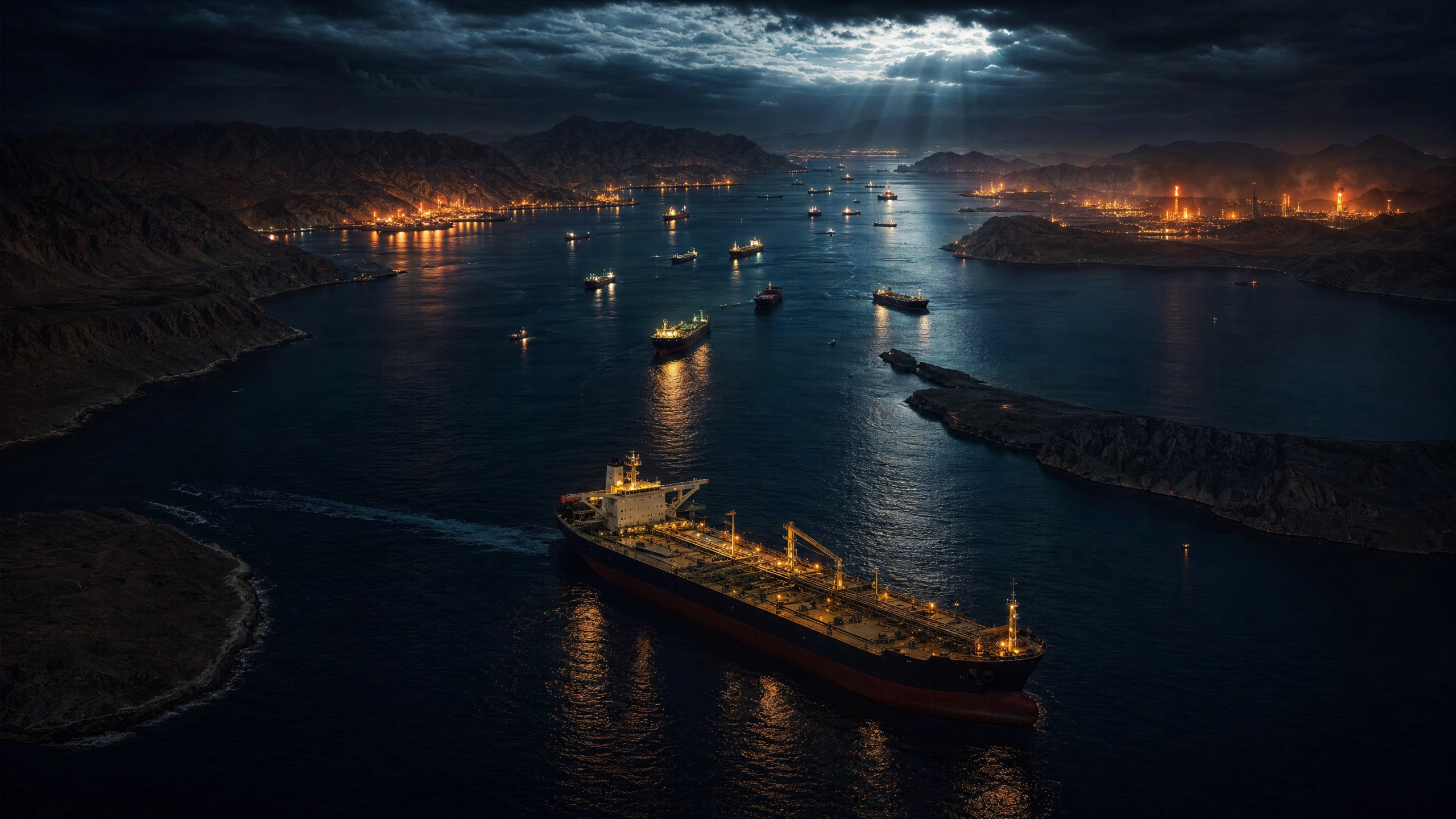
You can bomb a centrifuge. You cannot bomb a chokepoint.
That distinction is the key to understanding why, nearly three months into the US-Israeli military campaign against Iran, the strategic ledger looks far more complicated than the Pentagon's targeting maps suggest. Operation Epic Fury degraded Iran's nuclear infrastructure. It did not break Iran's leverage. In fact, it may have handed Tehran the most powerful economic weapon it has ever held — and Iran is now institutionalizing that weapon in ways that will outlast any ceasefire.
The numbers tell the story that the military briefings do not.
The Largest Supply Disruption in History
When Iran closed the Strait of Hormuz on February 28, 2026, it triggered what the International Energy Agency has since called the largest supply disruption in the history of the global oil market. That is not hyperbole. The 1973 Arab oil embargo disrupted roughly 7 percent of global supply. The 1979 Iranian Revolution disrupted a similar share. The 2026 Hormuz closure eliminated approximately 20 percent of global oil exports from water-borne transit in a single day.
By mid-April, after the US imposed a naval blockade of Iranian ports on April 13, the combined supply shock reached 13 percent of global crude output — nearly double the 1979 disruption. Brent crude rose above $130 per barrel, a 94 percent increase from pre-war levels. Refined product prices spiked even further. The IEA released 400 million barrels of emergency reserves — the largest coordinated release in the agency's history — and it barely moved the needle. The Strait of Hormuz remains closed as of this writing.
This is not a temporary disruption. Gulf producers cannot simply reroute their way out of it. Saudi Arabia, the UAE, Iraq, Kuwait, and Qatar have collectively seen their export capacity fall 14.4 million barrels per day below pre-war levels, according to the IEA's May 2026 Oil Market Report. Storage facilities are approaching capacity, forcing production shut-ins that take weeks or months to reverse. Qatar has projected that repairs to its natural gas infrastructure will take years. The physical damage to the region's energy supply chain is not a problem that a ceasefire agreement will fix overnight.
The Insurance Weapon
While the military campaign dominated headlines, Iran was quietly winning a parallel war in the global insurance markets — and that victory may prove more durable than any battlefield outcome.
Within 48 hours of the first US-Israeli strikes on February 28, war-risk premiums for vessels transiting the Strait of Hormuz surged fivefold. Major marine insurers — Gard, Skuld, NorthStandard, the American Club, and Lloyd's syndicates — canceled existing war-risk coverage for Gulf operations. The message to the global shipping industry was unambiguous: the Strait of Hormuz is now a war zone, and the private market will not insure you to sail through it.
The Trump administration responded in March with a $40 billion government-backed maritime reinsurance facility, assembled with Chubb, AIG, Berkshire Hathaway, Travelers, Liberty Mutual, and Starr. It was announced as the mechanism that would restore energy flows through the strait. As of mid-May, it has written zero business. Not one dollar of coverage has been placed. Not one vessel has transited under its protection.
The reason, as Chubb CEO Evan Greenberg explained on the company's April 22 earnings call, is structural: the facility requires vessels to transit under US naval escort. That convoy program — "Project Freedom" — guided exactly two ships through the strait in early May. It has not operated at scale since. As the Lloyd's Market Association put it plainly: "The reason ships are not moving is not through a lack of insurance; it is a question of the risk to crew and vessel safety being assessed by the ship masters and owners as too high."
Iran understood this dynamic before the first bomb fell. Control the physical risk, and you control the insurance market. Control the insurance market, and you control the shipping. Control the shipping, and you control the oil. The military campaign gave Iran the pretext to exercise a chokepoint leverage it had always possessed but never fully deployed.
Institutionalizing the Chokepoint
What makes the current moment genuinely alarming — and genuinely underappreciated in Western commentary — is that Iran is not merely exploiting the Hormuz closure as a wartime tactic. It is building permanent institutional infrastructure around it.
On May 18, Iran's Supreme National Security Council announced the formation of the Persian Gulf Strait Authority (PGSA), a new body tasked with managing the Strait of Hormuz in real time. The PGSA follows reports that Iran has been collecting ad hoc transit fees from commercial vessels since the earliest weeks of the war — payments reportedly reaching $2 million per voyage, according to Bloomberg. Iran's semi-official Fars news agency has now reported that Tehran will offer formal maritime insurance for vessels transiting the strait, with premiums settled in cryptocurrency, potentially generating more than $10 billion in annual revenue.
Iran is not calling this a toll. It is calling it a commercial insurance product. The legal distinction matters: under the UN Convention on the Law of the Sea, states cannot charge transit fees on ships passing through international straits. But there is no prohibition on selling insurance. Tehran is repackaging sovereign control as a financial service, and it is doing so with enough legal ambiguity to make the international response complicated.
The US, China, and the UN Secretary-General have all publicly opposed any tolls or restrictions on Hormuz transit. Following Trump's Beijing summit, the White House noted that Xi Jinping "made clear China's opposition to the militarisation of the strait and any effort to charge a toll for its use." Beijing has not disputed that characterization. But China is Iran's largest oil customer, and Chinese refiners have been quietly purchasing Iranian crude throughout the conflict. The gap between China's public statements and its commercial behavior is a gap that Iran is counting on.
Who Is Actually Winning?
The conventional framing of this conflict measures success in destroyed centrifuges and degraded missile stockpiles. By that measure, the US-Israeli campaign achieved real results. Iran's nuclear program was set back. Its air defense infrastructure was severely damaged. Its proxies in Lebanon and Yemen were degraded.
But that framing misses the economic dimension entirely — and the economic dimension may be what determines the long-term outcome.
The principal beneficiaries of the 2026 oil shock are not the Gulf states, whose production is stranded and whose infrastructure is damaged. They are the non-Gulf exporters: the United States, Canada, Norway, and Brazil, whose revenues rise with prices while their supply chains remain intact. The Gulf states — ostensibly the US's regional partners — are absorbing catastrophic economic damage. The UAE has reportedly sought financial assistance from the United States. Gulf sovereign wealth funds have initiated reviews of overseas investments. The petrodollar recycling mechanism that sustained decades of Gulf-Western economic interdependence is breaking down.
Iran, meanwhile, is extracting leverage from the disruption it created. Every day the Strait remains closed, Tehran's negotiating position strengthens. Every ship that pays a transit fee — however it is labeled — validates Iran's claim to manage the waterway. Every week that the US $40 billion insurance facility sits idle demonstrates the limits of American economic power to override physical risk.
Trump's negotiating ultimatum — dismantle your nuclear program, transfer your enriched uranium to the US, keep only one nuclear site operational — is not a deal. It is a surrender demand. Iran watched what happened to Muammar Gaddafi after he gave up his weapons program. No rational regime, having observed that outcome, will voluntarily disarm in exchange for promises from Washington. The five-point US proposal is not a path to a deal; it is a path to a prolonged stalemate in which Iran continues to collect Hormuz revenue while the ceasefire slowly collapses.
The Longer Game
I have spent my career building technology companies that operate at the intersection of data, markets, and institutions. One pattern I have seen repeatedly is that the party that controls the infrastructure — not the party that wins the initial confrontation — determines the long-term outcome. Iran has spent decades building leverage around the Strait of Hormuz. The US-Israeli military campaign gave Iran the political cover to finally exercise that leverage openly, and now Iran is converting a wartime tactic into a permanent institution.
The PGSA is not going away when the ceasefire holds. The Bitcoin insurance scheme is not going away when the bombs stop falling. The precedent that Iran can charge for Hormuz transit — however it is legally structured — will not be erased by a peace agreement that does not explicitly address it.
The United States won the military campaign. It may be losing the economic one. And in a world where 20 percent of global oil still has to pass through a 21-mile strait, the economic war is the one that matters most.
The clock is ticking — but not just for Iran.
Maury Blackman is the Founder and Chairman of Insight Integrity Group and Co-Founder and CEO of The Transparency Company. He previously served as Chairman and CEO of Accela (2005–2015) and CEO of Premise Data.